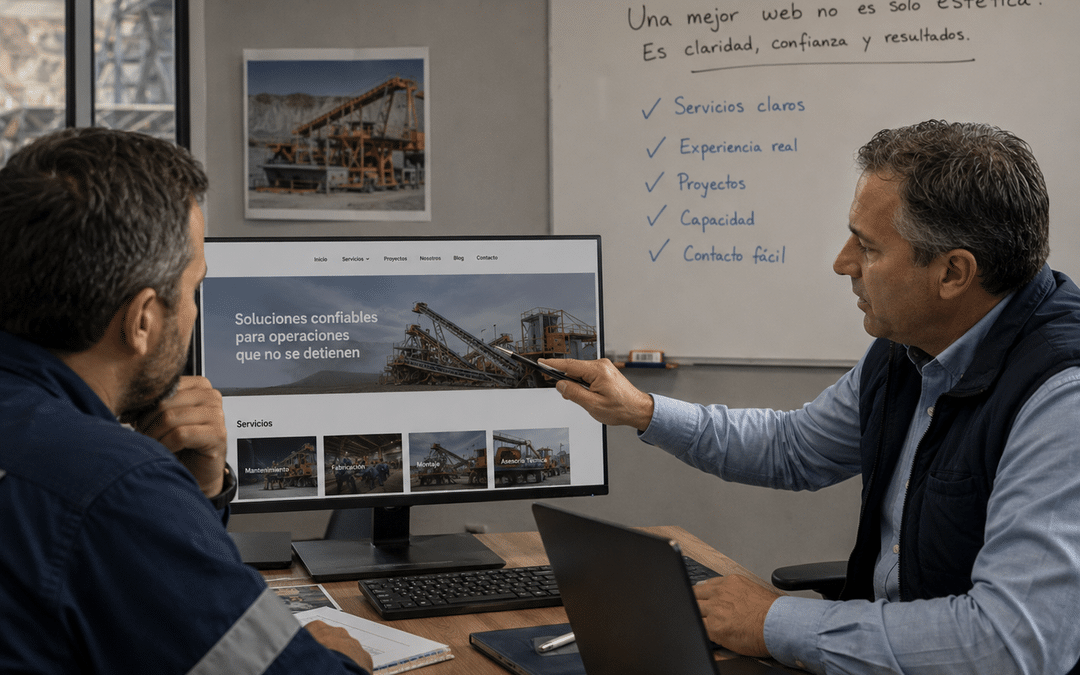
A mining supplier website should make it easy for mining companies, contractors, and procurement-related stakeholders to understand what the business does, what capabilities it can demonstrate, where it has relevant experience, and how to start a conversation. Strong design matters, but its primary job is to translate real operational capability into clarity, credibility, and confidence.
Does a Mining Supplier Website Need to Look Impressive?
It needs to look professional.
But visual appeal alone is not enough.
A B2B buyer visiting a supplier website is usually trying to answer practical questions.
They want to understand whether the company can solve a specific problem.
A website may look modern and still fail if it does not clearly communicate:
- services;
- industries served;
- relevant experience;
- capabilities;
- projects;
- resources;
- contact information.
A good-looking website can capture attention.
A clear website helps buyers decide whether the company is worth considering.
The Real Risk: Looking Smaller Than the Business Actually Is
Many industrial and mining suppliers have significant real-world capabilities.
They may have experienced people, equipment, infrastructure, technical expertise, and completed work.
But when a prospective client searches for them online, very little of that may be visible.
This creates a perception gap.
The actual company may be highly capable.
The digital version of the company may look limited or outdated.
That gap can come from:
- generic service descriptions;
- outdated photography;
- missing project information;
- weak capability evidence;
- unclear navigation;
- excessive corporate language;
- outdated content;
- poor contact paths.
The issue is not always capability.
Sometimes it is communication.
What Does a Mining Buyer Need to Understand?
There is no universal checklist that applies to every procurement process.
Requirements vary by company, project, location, and scope.
From a communication perspective, however, a supplier website should help buyers answer several basic questions.
What Does the Company Actually Do?
The core activity should be easy to understand.
Statements such as:
“We deliver integrated solutions with quality and commitment.”
sound professional, but provide very little concrete information.
A stronger description explains:
- the services provided;
- the problems solved;
- the type of work performed;
- the environments in which the company operates.
For example:
“We provide maintenance, installation, and technical support services for industrial and mining projects.”
This is a hypothetical example, but it illustrates the difference between corporate language and clear positioning.
Who Does the Company Work With?
Industry context matters.
If the company genuinely works across mining, construction, industry, energy, logistics, or infrastructure, showing those sectors can help buyers understand where its experience applies.
The goal is not to list industries simply to appear larger.
The goal is to organize and communicate actual experience.
Capability Should Be Demonstrated, Not Just Claimed
Statements such as:
“We have extensive experience.”
“Our team is highly qualified.”
“We are industry leaders.”
may support positioning.
But they are still claims.
When possible, a website should support those statements with evidence.
Completed Projects
Projects help buyers understand the type of work the supplier has already delivered.
If client names or sensitive information cannot be disclosed, companies can often describe the type of project, scope, or industry without revealing confidential details.
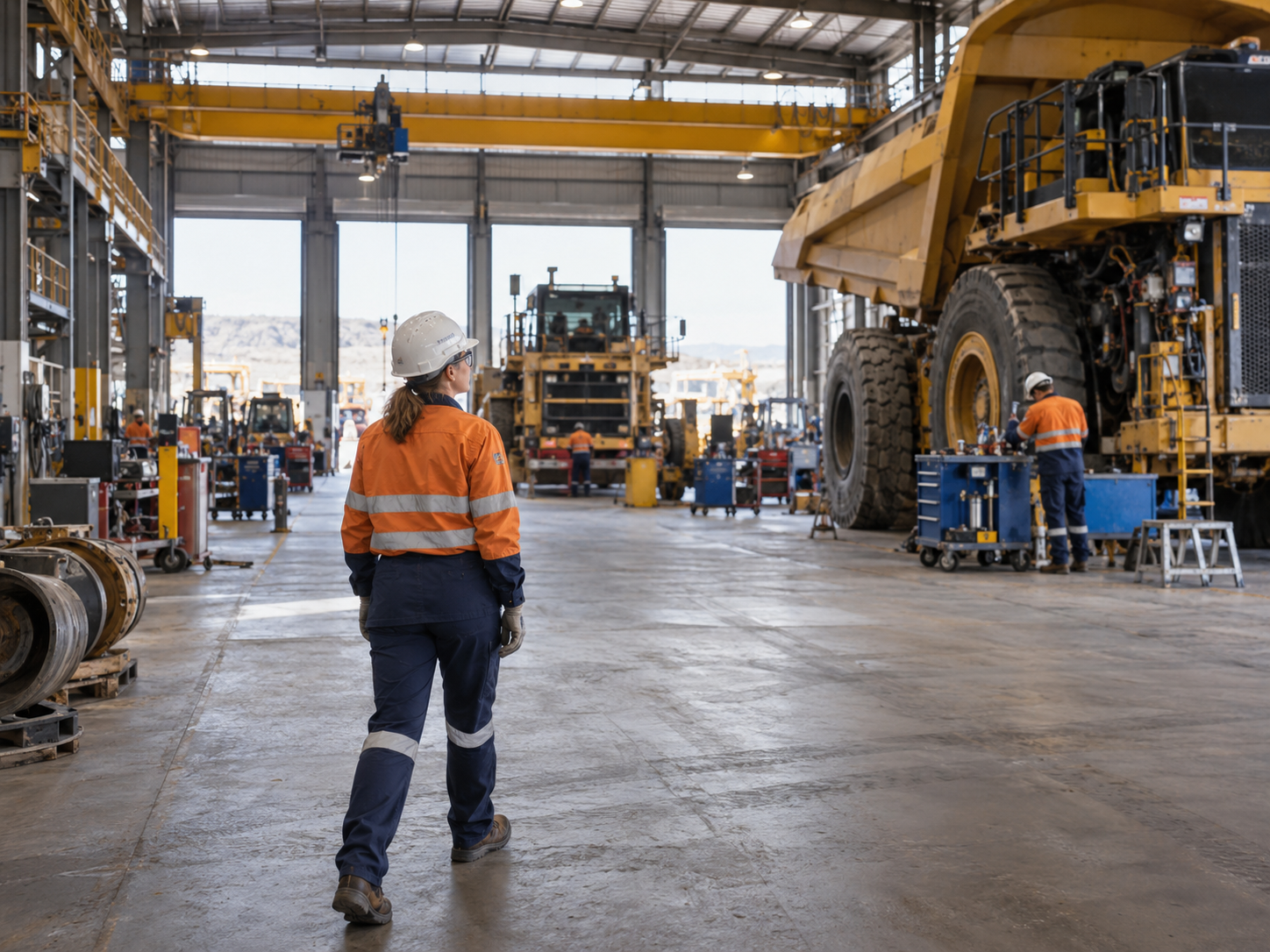
Real Photography
Authentic images of:
- teams at work;
- equipment;
- facilities;
- industrial sites;
- workshops;
- completed work;
can provide useful context.
They also help make the company feel tangible.
People, Equipment, and Infrastructure
Depending on the service, operational resources can be an important part of the buying decision.
Relevant information may include:
- facilities;
- machinery;
- vehicles;
- technical teams;
- workshops;
- warehouses;
- offices;
- specialist resources.
Only real and accurately represented capabilities should be shown.
Certifications and Registrations
If the company holds relevant and current certifications, permits, registrations, or standards, displaying them can support credibility.
They should be accurate, current, and verifiable.
A Mining Supplier Website Also Needs to Build Trust
A buyer is not only evaluating whether the supplier offers the right service.
They are also evaluating whether the company appears professional enough to engage.
Trust can be supported by:
- clear information;
- updated content;
- real projects;
- authentic photography;
- visible team or capability information;
- professional contact details;
- consistent company messaging;
- straightforward navigation.
A website does not need to repeatedly claim that the company is trustworthy.
Trust is usually built through multiple consistent signals.
Web Design Has a Strategic Role
Saying that a mining supplier website does not need to be “beautiful” does not mean design is unimportant.
Good design helps users:
- understand information;
- identify priorities;
- scan services;
- find projects;
- navigate capabilities;
- reach the right contact point;
- perceive professionalism.
Design should organize the story of the business.
It should not become the story itself.
What Sections Should a Mining Supplier Website Include?
The exact structure depends on the company.
However, common sections may include the following.
Homepage
The homepage should quickly communicate:
- what the company does;
- who it serves;
- where its expertise applies;
- what the next step is.
Services
Each service should be clearly explained.
Avoid vague service labels that require buyers to guess what is actually delivered.
Projects or Experience
Relevant work can support capability claims and help buyers understand the company’s background.
Industries Served
This section can provide context about where the company’s capabilities have been applied.
About the Company
This may include history, team, infrastructure, values, and other relevant company information.
Safety, Quality, or Sustainability
If these areas genuinely form part of the company’s operations and positioning, they may deserve dedicated sections.
They should not be included simply because they are common themes in mining.
Contact
Buyers should be able to quickly identify how to start a conversation.
Contact options may include:
- forms;
- email;
- telephone;
- business messaging channels;
- office locations;
- specific commercial contacts.
Too Much Corporate Language Can Hide the Real Value
Many B2B websites devote significant space to:
- mission;
- vision;
- values;
- company history.
These topics can matter.
But buyers first need to know:
Can this supplier help us?
A clearer structure often prioritizes:
- What the company does.
- Who it serves.
- What experience it can demonstrate.
- What capabilities it has.
- Why the buyer should feel confident.
- How to make contact.
Institutional content can then support those answers.
The Website Matters Even When the Lead Comes from a Referral
Not every visitor discovers a supplier through search or advertising.
In B2B, a company name may come from:
- a referral;
- a sales conversation;
- an industry event;
- a contractor;
- a colleague;
- a presentation.
The buyer may then search the company online to validate it.
At that point, the website becomes part of the buying experience.
The referral may open the door.
The website can help confirm whether the supplier looks capable of walking through it.
How to Review a Mining Supplier Website
Open the website as if you had never heard of the company.
Then ask:
- Can I understand what the company does within a few seconds?
- Are the services clear?
- Can I tell whether the company works in mining or related industries?
- Can I find evidence of experience?
- Can I understand its operational capability?
- Does the information look current?
- Does the company feel credible?
- Is it obvious how to contact the right person?
If several answers are no, the website may be underrepresenting the business.
Your Digital Presence Should Reflect Your Real Capability
Mining and industrial suppliers can spend years building:
- teams;
- equipment;
- processes;
- technical knowledge;
- infrastructure;
- relationships;
- project experience.
If none of that is visible online, a new buyer has no way to know it exists.
The goal is therefore not simply to “build a better website.”
It is to create a digital presence that communicates with the same level of professionalism as the company operates in the real world.
Frequently Asked Questions
What should a mining supplier website include?
It should clearly explain the company’s services, industries served, experience, capabilities, and contact information. Depending on the business, it may also include projects, real photography, team information, infrastructure, certifications, and relevant operational resources.
Why is a website important for mining suppliers?
Potential buyers may research a supplier before making contact or after receiving a referral. A strong website can help validate capability, experience, credibility, and relevance.
Does a mining supplier need a specific web design style?
Not necessarily. The priority should be clarity, professional presentation, and information that helps B2B buyers evaluate the company.
Should mining suppliers show completed projects?
When possible and authorized, yes. Projects can provide strong evidence of relevant experience and capability.
What if client names cannot be disclosed?
The company can often describe project type, scope, or industry context without revealing confidential client information, provided this complies with agreements and permissions.
Should certifications be shown on the website?
Yes, when they are real, current, relevant, and verifiable. Certifications should never be presented in a misleading way.
What information should appear first?
Visitors should quickly understand what the company does, who it serves, and why its capabilities may be relevant to their needs.
How can I tell whether our website represents our company accurately?
Compare what the company can actually do with what a first-time visitor can understand online. If important capabilities, projects, resources, or experience are missing, the website may be underrepresenting the business.