Skip to content

Are contacts enough to break into mining?
Contacts to break into mining open doors, but you need capabilities, evidence and preparation to make the most of opportunities.

Having the right contacts to break into mining can help you land meetings, referrals and your first business opportunities. However, a company also needs to demonstrate capabilities, experience and readiness to meet each client’s requirements. Knowing someone inside the industry does not guarantee becoming a supplier: the professional relationship must be backed by a solid commercial proposal.
The contact who got the meeting, but couldn’t solve what came next
Imagine an industrial maintenance company that has spent several years working with factories and contractors.
It has specialized staff, vehicles, tools and experience in technical interventions. Its operation works and its clients know the work it does.
Now it wants to start offering services to the mining industry.
One of its directors knows a professional connected with mining contractors. They talk, exchange information and eventually an opportunity comes up to present the company’s services.
The referral works. A meeting is set.
During the conversation, the potential client starts asking questions:
- What types of maintenance do you perform?
- Do you have experience in large-scale industrial facilities?
- What resources can you assign to a project?
- In which areas are you prepared to operate?
- Do you have a track record that allows us to assess your work?
- What documentation could you provide if a contract moved forward?
The company has answers to several of those questions, but never organized them.
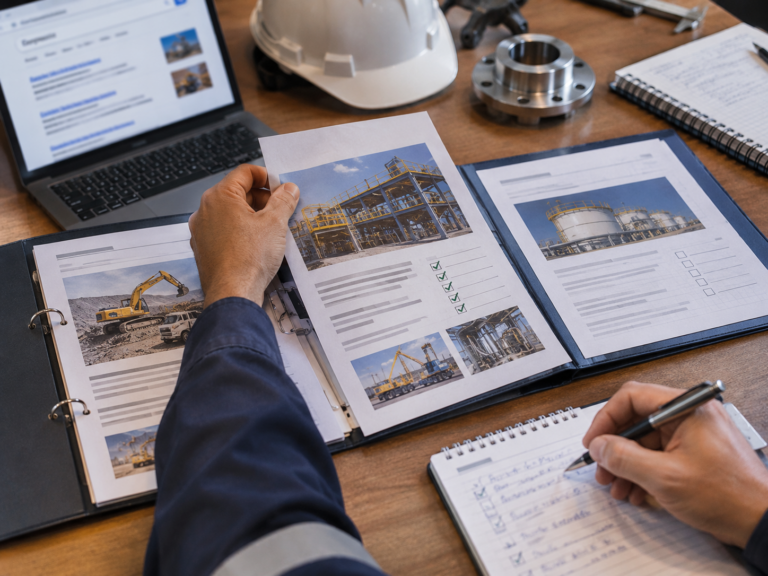
Its sales presentation lists many services without explaining its specialties. The photos are scattered across phones and internal folders. The website shows outdated information.
The meeting ends with a request for documentation and references.
The contact opened the door. Now the company needs to prove it is in a position to move forward.
That is the limit of a sales strategy based solely on knowing people.
Why contacts to break into mining are important, but not enough
Professional relationships are valuable in virtually any B2B market.
In mining they can be especially relevant because there are complex projects, multiple companies involved and needs that require coordination.
A referral can help identify the right decision-maker, learn about a specific need or better understand how a given market works.
It can also ease the first exchange with an organization that had never heard of the supplier.
Developing professional relationships is part of a healthy sales strategy.
The problem arises when people believe that a personal relationship replaces business readiness.
Knowing someone does not mean being qualified as a supplier
There is a difference between receiving a referral, being invited to submit a proposal and being in a position to take part in a procurement process.
Processes may include technical, commercial, documentation and risk assessments.
For example, BHP publishes information on how to become a supplier, while Newmont describes its registration and prequalification processes.
These references show that requirements can vary depending on the company, the operation and the type of service.
Having a contact within an organization does not guarantee passing its assessments, nor should it be used to bypass established procedures.
A professional relationship can facilitate legitimate conversations. The hiring decision must rest on the corresponding criteria and requirements.
1. The risk of depending on a single person
When a company bases its entire strategy for entering mining on one contact, it places too many expectations on a single relationship.
Maybe that person knows the industry very well, but is not involved in procurement decisions.
They may work in an area that does not need the services offered.
Perhaps they know of an interesting project, even though there is no concrete business opportunity yet.
Or they may change roles or companies.
None of that invalidates the relationship.
It simply shows that one contact is not the same as a developed market.
The difference between a business network and an isolated contact
A business network is built by understanding different types of players:
- Mining operators.
- Contractors that carry out construction work and services.
- Specialized suppliers that may need subcontractors.
- Technical and sales professionals connected with projects.
- Business chambers and relevant industry forums.
Each relationship brings different information.
Not all of them will lead to a sale, and not all of them should be approached with the same proposal.
A metal fabrication company, for example, may find opportunities through an industrial contractor without immediately becoming a direct supplier to a mining operator.
That is why, before asking for introductions, it pays to understand which organizations might actually need its services.
2. A referral does not explain what your company does
Suppose someone recommends a company by saying:
“I know a company in San Juan that does really good work.”
It’s a positive start.
However, the buyer still doesn’t know exactly what they can hire.
Maybe the company offers maintenance, assembly, fabrication, logistics and equipment rental.
A wide range of activities can be a strength, but only if it is presented in a way that is easy to understand.
The sales proposal needs precision
A presentation should help identify five aspects.
What service is offered. Which activities the company has experience in and which ones it wants to position.
For what type of project. What needs it can meet according to its real capacity.
With what resources. What staff, equipment, facilities or specialties support the proposal.
Under what conditions. Its operational scope, geographic coverage and availability, where applicable.
What evidence exists. What track record backs up its commercial claims.
A description like “we provide comprehensive solutions with commitment and quality” does not answer these questions.
And if a company needs a long meeting to explain what it does, its sales materials may not be doing their job yet.
3. Industrial experience can be valuable for mining
Not every company that wants to enter the industry has mining projects in its track record.
That doesn’t mean it lacks relevant capabilities.
A company may have carried out demanding work at industrial plants, infrastructure projects, energy facilities or production sites.
Some of those experiences may be relevant to mining needs.
But it is important to explain the connection precisely.
An example: mechanical maintenance
Imagine a company that performed maintenance on rotating equipment at an industrial facility.
Its presentation could describe the tasks performed, the resources used, the scope of the service and the general working conditions that can be shared.
That helps a buyer assess whether there is transferable experience.
On the other hand, claiming that the company specializes in mining maintenance without having worked in that industry yet could create the wrong expectation.
Transferable experience is a valid sales argument when it is presented honestly.
It also has its limits.
Working in an industrial environment does not mean automatically meeting every safety, logistics or execution requirement of a mining operation.
The assessment depends on each project.
4. Document preparation should start before you land an opportunity
A company may get a meeting and only then discover that it needs to gather information it had never prepared.
Depending on the client and the service, they may request legal and tax information, track record, technical documentation, staff information, insurance, management systems or other items.
In some cases there may also be registration, assessment or prequalification stages.
There is no universal list that applies to every mining company.
That is why it is important to review the specific conditions of the companies you want to offer services to.
What to organize in advance
The first task is not necessarily to submit registration applications on every available platform.
It is best to start by:
- Identifying which documentation is current and where it is kept.
- Recognizing which information applies to the company’s activity.
- Checking which capabilities can be backed by a track record.
- Reviewing requirements published by potential clients.
- Detecting technical, administrative or management gaps.
- Defining who will respond to commercial and documentation requests.
Part of this preparation goes beyond marketing and requires the involvement of administration, operations, safety, management and other areas.
Communication can organize information and make it easier to present, but it does not replace actually meeting the requirements.
5. Contacts to break into mining also need digital backing
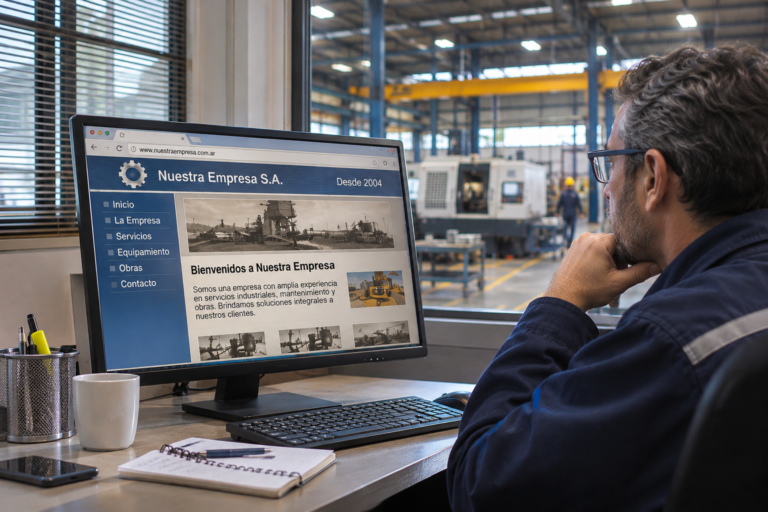
A referral can generate interest. However, before moving forward, the buyer will likely research the company.
They may search for its name on Google, visit its website, check LinkedIn and review public projects or references.
The referral gave them a reason to look into it.
Now they need to gather information on their own.
What the potential client should find
A useful B2B website should let them identify the company’s services, capabilities, experience and operational scope.
It should also offer up-to-date contact details and examples of work that can be shared publicly.
LinkedIn can complement that information with company activity, projects and content related to the operation.
There is no need to expose confidential information or turn the website into a supplier file.
It is worth making sure, though, that the company doesn’t look smaller, less specialized or less up to date than it really is.
When communication contradicts the referral
Imagine someone recommends a company because it has the capacity to carry out complex industrial assembly projects.
The buyer opens its website and finds only general repair services.
The company developed new capabilities over the last few years, but never added them to the site.
The contact talked about one company.
The digital presence seems to show another.
That gap can make a preliminary assessment harder, even when the supplier has the necessary resources.
That is why it is worth complementing this preparation with a sales strategy for selling to mining that connects the services, the target market and the presentation materials.
6. Selling to a mining operator is not the same as working for a contractor
A company that wants to break into mining may focus exclusively on the best-known operators.
However, a mining project involves multiple players.
Some companies carry out civil works.
Others handle assembly, maintenance, logistics or specialized services.
There are also manufacturers and suppliers that are part of broader supply chains.
This opens up different business possibilities, although each one will have its own conditions.
Two paths that require different approaches
Direct sales to a mining operator. It may involve specific purchasing, assessment and hiring processes, depending on the service and the organization.
Sales to a contractor. It may respond to specific needs of projects, works or services that the contractor carries out for a mining client.
Neither of these routes guarantees results, and neither is necessarily easier in every case.
Which one makes more sense depends on the service, the supplier’s capacity and the real opportunities.
A strategy that only seeks contacts at large operators may leave out other relevant relationships.
7. How to make the most of a sales introduction in mining
Suppose that tomorrow a contact offers to introduce your company to a potential buyer in the industry.
Before sending a generic brochure, it is worth researching what type of organization it is, what projects it develops and what needs could relate to your capabilities.
Then you can prepare a short, specific presentation.
If the opportunity is linked to mechanical maintenance, it would make no sense to devote most of the document to activities unrelated to that need.
The material should explain the relevant service and provide the appropriate track record.
What should happen after the meeting
A sales conversation needs follow-up.
It is useful to record:
- What need was discussed.
- What information was requested.
- Who is responsible for sending it.
- What requirements need to be verified.
- What the agreed next step is.
If the buyer requests documentation, the company must be able to respond in an organized way.
If there is no concrete opportunity yet, it is best to maintain a professional relationship without pushing proposals that do not respond to an identified need.
The initial contact is a starting point.
Building a business relationship requires consistency.
8. A practical example: two suppliers with the same contact
Imagine two industrial suppliers from San Juan.
Both know someone connected with contractors working in mining.
That person offers to introduce their services.
First company: it has experience, but hasn’t organized it
The company does fabrication and maintenance work.
It sends a corporate presentation with a long list of activities and a few photos with no description.
Its website is outdated.
When asked for references for a specific service, it needs several days to gather information spread across different departments.
That doesn’t mean it can’t do the job.
It means it still needs to improve its sales readiness.
Second company: it presents a concrete proposal
It also has industrial experience.
Before the meeting, it identifies which services may be relevant to the potential client.
It prepares real references, describes its capacity and checks what information it will be able to provide.
Its website backs up the presentation with up-to-date services, photos and clear contact channels.
The buyer has better elements to interpret the proposal.
The second company is not guaranteed a contract.
It will have to prove that it meets the corresponding technical, commercial and documentation requirements.
But it made the most of the introduction to start a more concrete assessment.
Both cases are hypothetical. They illustrate how a conversation changes when there is prior preparation.
9. How to develop contacts to break into mining with a strategy
Relying exclusively on contacts to break into mining can limit business growth when the company does not yet have a clear proposal or an organized track record.
A stronger strategy combines professional relationships with market knowledge and sales readiness.
Attending industry events, getting to know contractors, talking with professionals and following projects can provide valuable information.
But that information should be used to better understand where the company’s services fit.
It is worth researching:
- Which organizations might need its services.
- Which projects it makes sense to take part in.
- Which capabilities it can demonstrate.
- What its operational limits are.
- Which requirements it needs to verify.
- Which sales materials it should prepare.
This way of working makes it possible to build relationships based on a concrete proposal.
It also avoids turning every contact into a generic request for help to get into the industry.
A better question to start conversations
Instead of only asking:
“Do you know anyone in mining?”
It may be more useful to explain:
“We do mechanical maintenance for industrial facilities and we want to identify contractors that may need that service. What kind of companies usually hire it and how does that process work?”
The second conversation has a clearer goal.
It makes it possible to learn about the market and assess whether there is a real opportunity between supplier and buyer.
To go deeper into this preparation, you can also read our guide on how to prepare a company to become a mining supplier.
The contact starts a conversation; the company has to be ready to sustain it
Professional relationships can accelerate market knowledge and enable relevant introductions.
They are a business asset.
However, their value also depends on what happens next.
If the supplier cannot explain its services, demonstrate its experience, identify its operational limits or provide information when needed, the opportunity may stall.
That is why breaking into mining requires combining operational capacity, sales readiness, industry knowledge and consistent communication.
The goal should not be just to get contacts to break into mining. It should be that, when an opportunity comes up, there is a solid proposal to evaluate.
Frequently asked questions
Can you break into mining without contacts?
Yes. You can start by researching companies, projects, contractors and formal procurement processes. Professional relationships can develop along the way. Either way, winning a contract will depend on the corresponding capabilities and requirements.
Is knowing someone inside a mining company enough?
No. A relationship can provide information or an introduction, but it does not replace purchasing processes, technical assessment or commercial and documentation requirements.
What does a company need to start selling to mining?
It needs to define relevant services, demonstrate capabilities, identify potential buyers and review procurement requirements. It is also advisable to prepare sales materials and a consistent digital presence.
Is prior mining experience mandatory?
It depends on the client, the service and the contract. Some opportunities may value transferable industrial experience, while others require a specific track record.
What documentation do mining companies require from their suppliers?
Requirements vary depending on the company, the operation and the type of work. They may include legal, tax, technical, safety and insurance information, track record and other documents.
Is it better to sell directly to a mining company or to a contractor?
Both options can be valid. The best choice depends on the services, the operational capacity and scope of the company, and the needs of each organization.
What is a website for if we already have business contacts?
It lets buyers research the company, understand its capabilities and find consistent information before starting or continuing a conversation.
How do you make the most of a business referral in mining?
By researching the buyer, preparing a relevant proposal, gathering real references, verifying requirements and following up professionally on the conversation.
What does a customer find when they search for your company?
Take the digital check-up, free and with no sign-up: 16 questions that show how you look on Google and in artificial intelligence, and what to improve first.